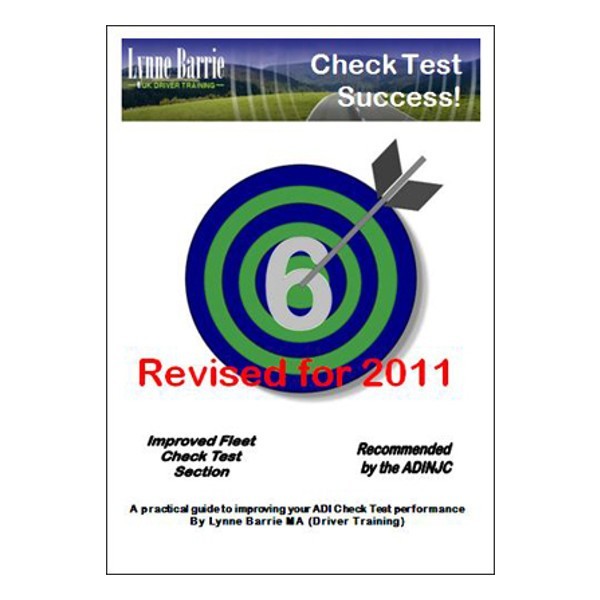
Check Test Success is a jargon free, concise guide to the check test which also gives you the tools to assess your own instructional technique and pointers on how to improve on your weaknesses. It starts off with a clear and full appraisal of the check test, what it is, how and by whom it is conducted and what is expected of you. It provides tips on choosing a suitable pupil and what happens if you don’t have one and have to have a role-play check test. The question of 'which topic to teach' is covered in detail and Lynne gives her own rating, from ‘unsuitable’ to ‘an excellent choice’, of 19 key lesson subjects. There are extremely useful notes on what points should be considered when teaching each of these subject areas.
Lynne reveals how the DSA's performance assessment works, with the criteria being that which is used for the Part 3 exam. The main emphasis is again on the Core Competencies: Fault Identification; Fault Analysis and Remedial Action. These areas and those of Instructional Technique, which are also assessed, are fully explained. As in Lynne’s ‘Pass Part 3’ book there is a useful Fault Identification Chart, which provides you with exactly what to say when particular faults arise, along with some valuable pointers and examples for using Q & A.
There is a section on building confidence which includes advice on how to use the tone of your voice as a tool; a valuable addition to the book. Preparation and conduct on the day, including: positive attitude, appearance of yourself and your car, meeting the examiner, planning your lesson and timings are all covered well. There is a detailed run through of each of the grades, 1-6 and E (Educational), from which a lot of what is expected of you can be read.
In the final chapter, Lynne covers the Fleet Check Test. This section has been updated and improved, providing a more thorough insight into what is sometimes called 'the test of continued ability to give instructional coaching'. Lesson structure, performance assessment and coaching skills are all covered without losing focus on the subject. To polish off this section there is an interesting comparison of traditional instruction and coaching phrases, as used by a Fleet Trainer.
If you really want to improve your Instructor Grade and get that elusive grade 6 on your next check test you really should consider this book as being essential reading.



 Maximize



Follow us